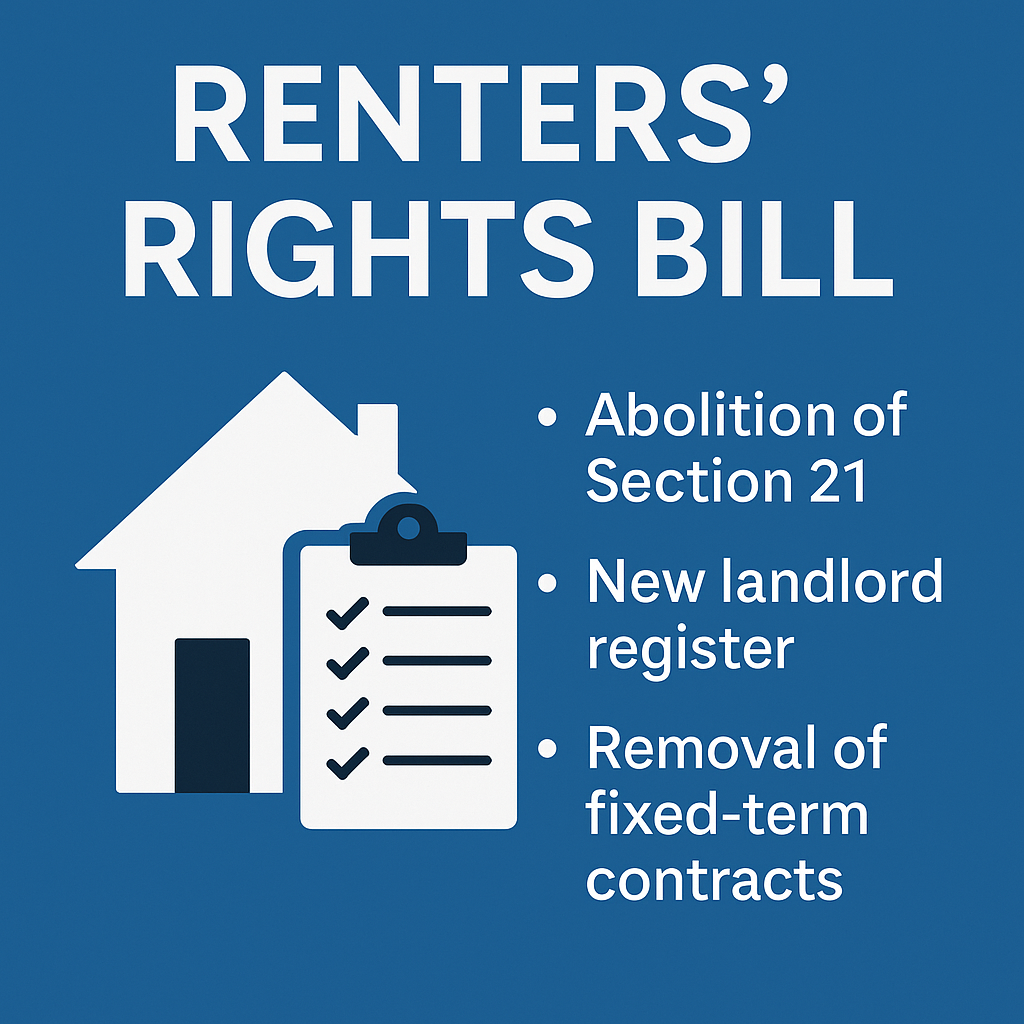
The Renters’ Rights Act (RRA) is finally coming into force tomorrow and represents the most significant reset the Private Rented Sector (PRS) has seen in decades.
It fundamentally reshapes how renting works, including the abolition of Section 21 “no-fault” evictions, the introduction of periodic tenancies, stronger tenant protections, and a more formalised system of enforcement and redress.
The Renters' Rights Act in England takes effect on 1 May 2026, marking a major shift to periodic, rolling tenancies. Key changes include the abolition of Section 21 "no-fault" evictions, a ban on rental bidding wars, and new rights for tenants to request pets, with all existing tenancies converting to periodic on this date.
Key Changes from 1 May 2026:
- Tenancy Types: All Assured Shorthold Tenancies (ASTs) convert to Assured Periodic Tenancies (APTs).
- Ending Tenancies: Fixed-term contracts are abolished; tenants can give two months' notice at any time (all fixed-term assured shorthold tenancies (ASTs) will automatically convert to "rolling" periodic tenancies) This means tenancies will no longer have a set end date, and tenants can typically give two months' notice to leave at any time.
- Evictions: Landlords can no longer use Section 21 notices to evict tenants without a reason. Evictions must now be based on specific legal grounds, such as wanting to sell the property or moving in themselves. Landlords must use strengthened Section 8 grounds, with 4 months' notice needed to sell or move in, and no such evictions within the first 12 months.
- Rent Increases: Limited to once per year, with a two-month notice period to the tenant, which tenants can challenge.
- Bidding Wars: Prohibited. Landlords cannot encourage or accept offers above the advertised rent.
- Discrimination: Banning discrimination against tenants with children or in receipt of benefits.
- Pets: Tenants have the right to request pets, which landlords cannot unreasonably refuse.
Important Notes:
- Compliance: Landlords face potential fines up to £40,000 for non-compliance.
- Transition: The Act applies to almost all existing tenancies as of 1 May 2026.
Immediate Obligations for Landlords
- New Section 8 Forms: Landlords must use updated prescribed forms (such as Form 3A) for any possession notices issued from this date onwards.
- Rent Increase Restrictions: Landlords can only increase rent once per year and must provide at least two months' notice using the official Form 4A.
- Deadline for Information Sheets: While the Act begins on 1 May, landlords have until 31 May 2026 to provide all existing tenants with a government-produced Information Sheet explaining their new rights.
Important Exceptions
- Ongoing Evictions: If a landlord served a valid Section 21 notice before 1 May 2026, that notice remains valid. They have until 31 July 2026 to start court proceedings based on that old notice.
- Social Housing: These specific reforms for private rentals will not apply to social housing until October 2027.
Landlords rush to seek evictions ahead of Renters’ Right Act
The number of landlords being helped with tenant evictions, rent arrears recovery and tenant disputes has soared, new data suggests.
The figures from Landlord Action come just days before the Renters’ Rights Act is introduced on 1st May.
The change in rental laws includes the abolition of the so-called ‘no-fault’ section 21 evictions.
Landlord Action’s founder Paul Shamplina claimed landlords were taking action and evicting tenants while they still can ahead of the change in the law as landlords are “not confident in what replaces it’.
He explains that faced with a lack of flexibility and the prospect of more complex and protracted possession routes, landlords are acting now while existing options remain available.
Landlord Action, which helps landlords with tenant evictions and disputes, says instructions have risen 60% compared to March a year ago, while enquiries were up 75% during the same period.
It claims that the increase reflects what many had predicted would happen ahead of the new law being introduced, with more landlords seeking possession of their properties.
Shamplina said “this is exactly what we said would happen. As Section 21 is phased out, landlords are acting now while they still have certainty, because many are not confident in what replaces it. From the conversations I have been having with landlords across the country, there is still a great deal of confusion about how possession will work in practice, alongside growing concern about compliance, court delays, rent arrears and rising mortgage costs.
That combination is pushing landlords into making decisions earlier than they otherwise would. Some landlords are choosing to exit the sector altogether, while others are regaining possession now rather than risk being unable to do so later.
While possession activity will inevitably slow once these changes come into force, much of the damage will already have been done. Good landlords leaving the market and tenants losing homes in circumstances where, previously, no action would have been taken.”
Tenant Uncertainty
Research from Rightmove points to huge uncertainty among renters ahead of the Act coming in this week.
Letting agents may find themselves with their hands full as new research highlights huge uncertainty among tenants ahead of the Renters’ Rights Act coming into force this week.
Most renters are aware of the Act, but more than a third say they are not confident that they understand what the changes mean for them.
Almost three quarters 73% know about the Act, yet 37% say they are unsure what it means in practice, according to research by Rightmove.
The findings show that younger tenants aged 18-34 are particularly uncertain, with many describing their experience of renting as frustration, at 39%, or stressful, at 31%.
And almost half at 47% of younger tenants say they have previously chosen not to report an issue in a rental property, as it is ‘too much of a hassle’.
The findings come as Rightmove’s latest Rental Trends Tracker shows how the 2026 market has entered a more balanced position, with improved supply and demand conditions.
Rightmove has launched a new hub on its website to help support renters with guidance around what the new rules could mean for them.