
Rental growth is expected to stabilise to pre-Covid norms over the next couple of years as surge in tenant demand subsides, forecasts Savills.
UK rents are set to grow by 12.0% over the next five years, according to the property firm Savills, as the market returns to more normal and predictable conditions.
Savills’ five-year rental forecast expects rental affordability to improve over the five-year period, as income growth remains relatively high and demand eases.
Emily Williams, director of research at Savills. said “the private rented sector has been uncharacteristically turbulent over the past few years. Rental growth at a macro-level is typically very closely linked to income growth, but that trend has been turned on its head in recent years, with growth peaking at 12% in the year to August 2022.
As a result of this divergence, the average renter spent a third (32.4%) of their gross household income on rent in 2025 – up from 30.4% five years earlier. This marks the largest worsening in rental affordability since at least 2006, and probably since the early 1990s.
However, as demand levels start to settle, our forecast indicates that conditions over the next five years are expected to return to more normal levels, with rents increasing at a rate between inflation and income growth. Any significant disruption to supply caused by the Renters Rights Act and other regulation of the market is the key risk to this outlook.”
The UK rental market has faced persistent supply challenges over the past decade.
According to Savills, landlord instructions to let homes have been declining since 2017, due to a combination of tax reforms, rising interest rates and anticipated regulatory changes, which have made buy-to-let investment less attractive, prompting some landlords to exit the market.
At the same time, the scale of Build to Rent remains insufficient to fill the gap, averaging just 15,000 completions annually against a backdrop of 4.9 million households in the private rented sector, says Savills.
However, high demand has played an even more significant role. The RICS survey recorded unprecedented tenant demand between 2021 and 2023, due to a post-lockdown spike in activity and a sharp rise in net migration, which has resulted in 600,000 additional households over five years.
This influx equates to a 10% increase in demand within the private rented sector over just two years. Return to normal market conditions Savills’ forecast expects demand levels to fall back in line with the more normal market conditions of the 2010s.
This comes as first-time buyer numbers have also been elevated during 2025, thanks to easing lending rules, which have increased the flow of households out of the private rented sector, and net migration numbers have also eased.
According to HomeLet, the average rent as a share of income has declined from 33.4% at the end of 2023 to 32.4% in the third quarter of 2025, indicating an early movement back toward the long-term trend.
Over the next five years, Savills expects rents to continue to adjust accordingly, with growth anticipated to align between the rates of CPI inflation and household income growth.
“As it stands, the main risk to our forecast is the potential for another surge in net migration, or a major supply shock on a similar scale” continues Williams. “So far, the outflow of landlords from the private sector has been gradual, however, now that the Renters’ Rights Act is law, it is vital that being a landlord remains profitable and appealing. If investment into the sector shrinks further, we could see a supply-side shock to match the demand surge that has already made renting so difficult in recent years.”
A third of tenants spend half their income on rent
Around a third of tenants are now handing over at least half of their take-home pay to pay rent, research reveals.
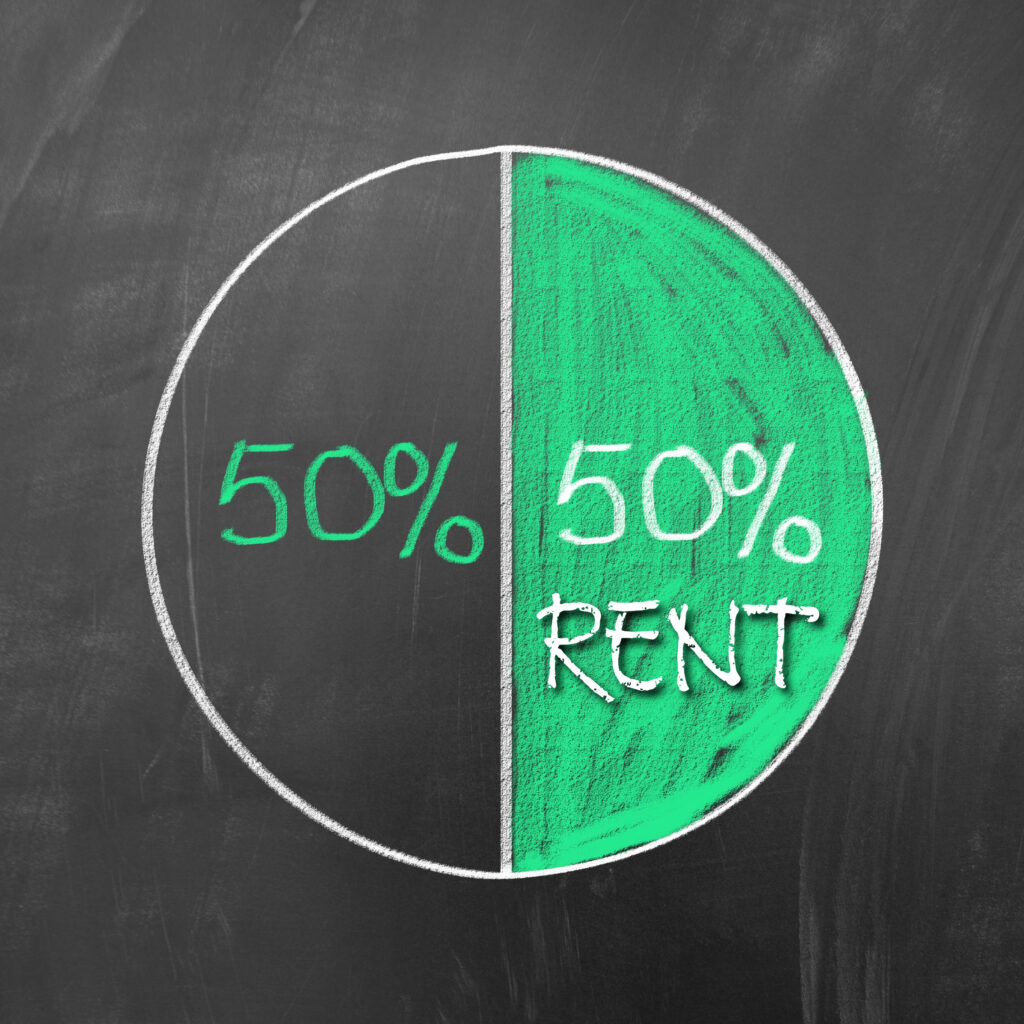
According to deposit alternative provider Reposit, 14% of tenants spend between 50% and 60% of their net income on rent, while 11% allocate 60% to 70%.
A further 6% spend more than 70%, while another 22% spend between 40% and 50% of their pay.
The firm’s chief executive, Ben Grech, said “it’s still a really tough time for renters.
With so many already spending half of their take-home pay on rent, the traditional upfront deposit only adds to the pressure.
With average cash deposits now around £1,380, anything that helps ease this burden or give tenants more financial breathing room can make renting more manageable.
Landlords shouldn’t assume affordability simply because a tenant can pay a deposit.
Previous Reposit research shows that one in five renters borrow money as repayable debt, to cover this cost.”
The survey of 1,000 renters found that 31% are devoting half or more of their take-home income to rent.
That’s equivalent to 40% of gross pay, which is far above traditional affordability measures.
For decades, the so-called ‘30% rule’ has been a benchmark for housing affordability, suggesting tenants should not spend more than a third of gross income on rent.
Reposit’s findings suggest many households are far beyond that threshold, leaving little room for essentials such as food, bills and transport.
Reposit’s data puts the average UK rent at £1,196 per month, while the Office for National Statistics says average weekly earnings are £733, or £38,116 a year.
That means the typical tenant is spending 38% of their gross income on rent — well above the recommended limit.
The analysis also found affordability pressure climbs sharply with higher rents.
Among tenants paying up to £1,000 per month, 78% were already spending more than 30% of their take-home pay on rent.
At £1,500 or above, that figure rises to 84%.